
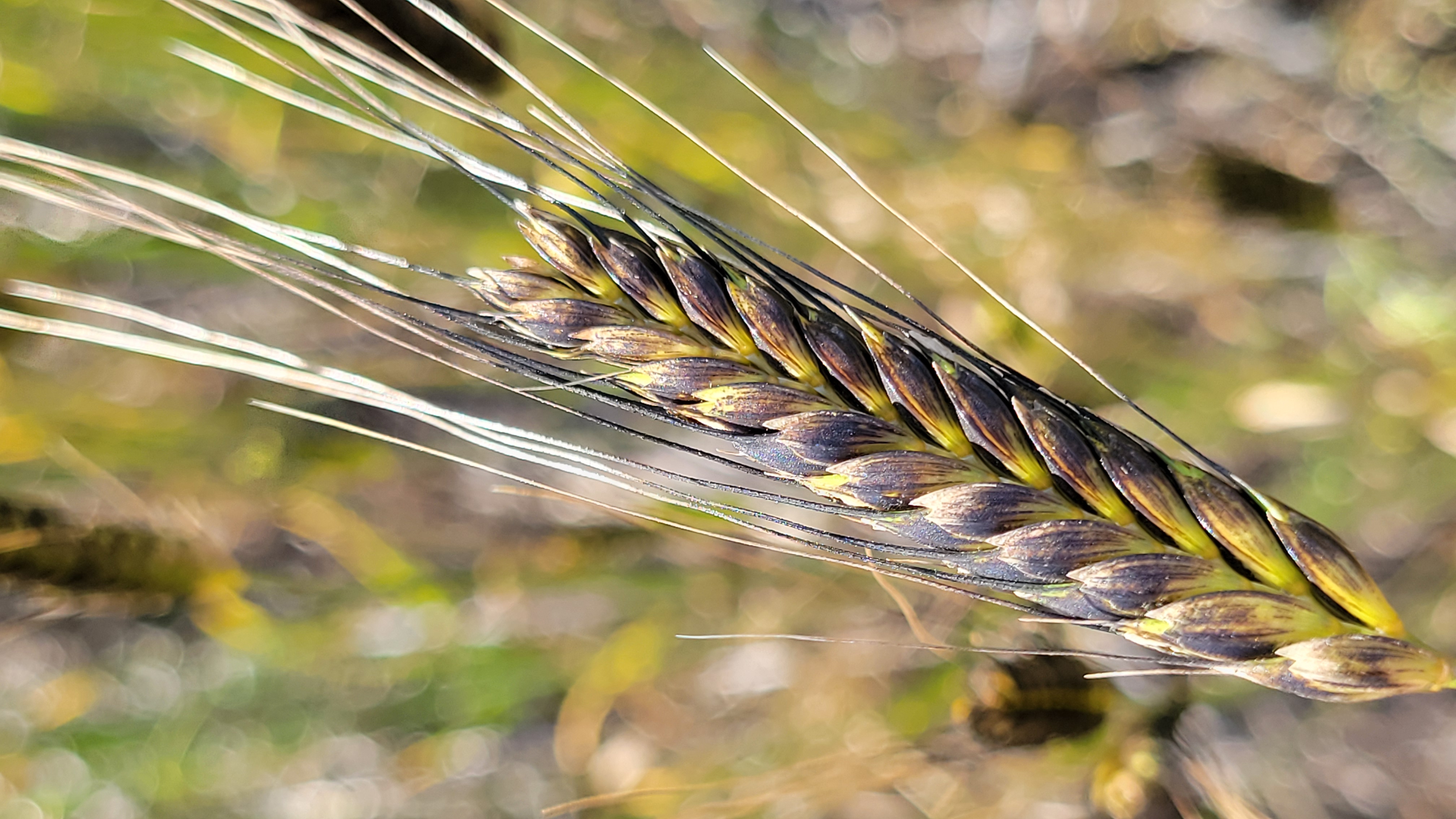
Most people have never heard of einkorn. Walk into any grocery store and you won't find it. Ask your baker and they'll probably shrug. But einkorn is the oldest wheat on earth — the one humans first cultivated over 10,000 years ago in the Fertile Crescent.1
Unlike every other wheat on store shelves today, einkorn has never been changed.
What Is Einkorn Wheat?
Einkorn (Triticum monococcum) is the most ancient of the domesticated wheats. It was first cultivated around 10,000 BCE in the Karacadağ Mountains of what is now southeastern Turkey, then spread westward through Europe over thousands of years.1
What sets einkorn apart from every other wheat is its genome. Einkorn is a diploid — it has just 14 chromosomes, the original set. Modern bread wheat (Triticum aestivum) is a hexaploid with 42 chromosomes, the result of multiple hybridization events over centuries of agricultural selection.2
That's not a small difference. At the genetic level, it's a fundamentally different plant.
"Modern wheat was bred for the field. Einkorn was made for the body."
Why Does Einkorn Feel Different to Digest?
Here's what we hear constantly: people who've given up bread entirely try einkorn and feel fine. No bloating. No heaviness. No foggy afternoon.
The reason comes down to gluten structure. Einkorn's gluten proteins — its gliadin and glutenin fractions — are present in different proportions than modern wheat, and research suggests they are less immunoreactive for people with non-celiac wheat sensitivity.3
Important note: Einkorn is not gluten-free and is not safe for people with celiac disease. But for the large population of people who feel terrible after eating modern wheat without a formal diagnosis, einkorn is often a very different experience.
Is Einkorn Gluten-Free?
No. Important note: Einkorn is not gluten-free. Those with celiac disease should be advised it still contains gluten.
For people with non-celiac wheat sensitivity — a real but less understood condition — the picture is more nuanced. The same studies that show einkorn's different gluten profile also suggest lower reactivity in sensitive individuals, but this varies person to person.3 When in doubt, consult your doctor.
Modern Wheat
- • 42 chromosomes (hexaploid)
- • Hybridized in the 20th century
- • Grown with synthetic inputs
- • Complex gluten structure
Einkorn
- • 14 chromosomes (diploid)
- • Unchanged for 10,000 years
- • Thrives without pesticides
- • Simpler, less reactive gluten
More Nutrition, Naturally
Einkorn isn't just different — it's measurably more nutritious. We had our grain independently tested at Utah State University, and the results confirmed what the published literature suggests:4,5
- 37% more protein than conventional wheat
- 373% more lutein — a carotenoid antioxidant linked to eye and cardiovascular health
- 424% more Vitamin B3 (niacin) — essential for energy metabolism and nervous system function
- 400% more biotin — supports skin, hair, and metabolic health
The golden color of einkorn flour isn't a dye or additive. It comes from carotenoid pigments — the same antioxidant family found in carrots, sweet potatoes, and leafy greens. You can literally see the nutrition difference.
How Do I Use Einkorn?
Einkorn is versatile. You can get it as whole berries (the unprocessed grain kernel) or as flour. Here's how to work with it:
Bake with it
Einkorn flour makes excellent bread, pastries, pancakes, and pasta. The flavor is richer and nuttier than modern wheat — most people taste the difference immediately. The dough handles differently: it's softer and stickier, with less elasticity, so give yourself a bake or two to calibrate.
Cook the berries whole
Simmer berries in water or broth for about 25 minutes until tender and chewy. Treat them like farro or barley — grain bowls, salads, soups, side dishes. They hold their texture well and absorb flavor beautifully.
Sprout them
Soak berries overnight, then rinse and drain twice daily for 2-3 days until small tails appear. Sprouted einkorn is packed with bioavailable nutrients and enzymes. Add to salads, blend into smoothies, or dehydrate and grind into sprouted flour.
Why We Grow It
At Better Grain, we grow einkorn on our family farm in Alberta using regenerative practices — no pesticides, no herbicides, no insecticides, no shortcuts.
Einkorn is a difficult crop to grow commercially. It yields less than modern wheat, grows more slowly, and requires more hand with threshing. But it thrives in Alberta's cold winters without chemical inputs, and it builds soil organic matter rather than depleting it.
We believe the trade-off is worth it. Grow less. Grow better.
"If you've given up on wheat, don't give up yet. You just haven't tried the right one."
No spam. Just grain news.